
No. 03 · Garden joinery
Oak table built around a living tree
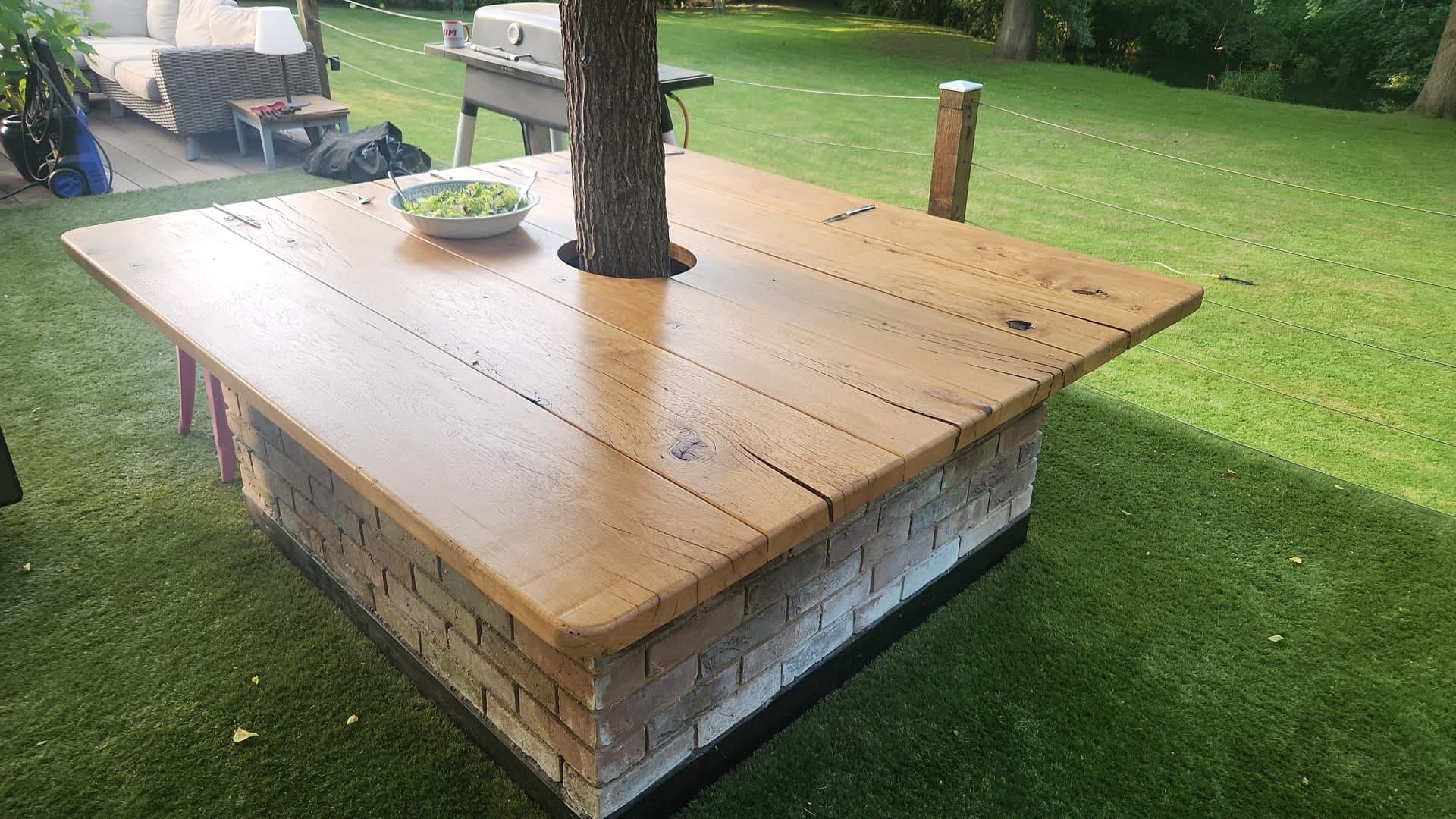
A solid oak garden table built in place around a mature trunk, on a brick plinth.
The job
- Discipline
- Garden joinery
- Where
- Surrey, UK
- Guide range
- £600 – £1,500 · bespoke side gate, hung and ironmongered
- Photographs
- 1 of the finished job, plus what was there before
Materials
- Solid European oak
- Reclaimed brick plinth
- Exterior oil finish
Garden · Solid oak · Built around a tree · Replacement
Or talk it through first. No obligation either way.
The brief
Building a fixed thing around a living one that has no intention of staying the same size.
A mature tree in the middle of the best part of the garden, already wrapped by a table made of reclaimed boards that had reached the end of it. The tree was staying. The table was being replaced in solid oak.
What we did about it
Wide oak boards laid in two halves with a shaped aperture cut to clear the trunk, leaving room for it to keep growing. The top sits on a reclaimed brick plinth so nothing bears on the roots, and the whole thing is oiled rather than sealed so it silvers gently rather than peeling.
Six decisions you cannot see in the photograph.
These are the parts nobody asks about at the quote stage and everybody notices ten years later.
Second time around the same trunk
Replacing a table rather than designing one from nothing removes most of the guesswork. Where people actually sat, how far the top needed to reach, how much clearance the trunk had eaten in the meantime — all of it was already answered by the thing being taken away. What was left to decide was the material and what holds it up, which is where the previous one had given up.
The aperture is cut oversize, and that is not sloppiness
A mature trunk puts on girth every year. Cut the hole to fit the tree on the day and within a few seasons the tree wins: the top splits, or it grips the bark and damages it. The clearance here looks generous in a photograph and is the single decision that decides whether this table is still a table in ten years.
Nothing bears on the roots
The obvious way to support a table around a tree is four legs dug in close to the trunk, which means digging through the root plate of the thing the table is built to celebrate. A brick plinth set out from the trunk spreads the load on the surface instead, and can be lifted later without a spade going anywhere near a root.
Two halves, not one top
Made in two pieces the top can be lifted off by two people, the tree can be got at, and each half is free to move seasonally without fighting the other. One continuous top around a trunk would be a lovely photograph and a repair job by the third summer.
Oiled rather than sealed
A film finish on an exterior oak top looks superb for one season, then cracks, lets water underneath and peels, and the only cure is stripping the lot. Oil wears rather than fails. Once a year, half an hour with a cloth, and it either stays honey-coloured or is left to go silver — the client's choice, made annually rather than once.
Boards laid with movement allowed for
Oak outdoors moves with every wet week and every dry one. The boards are laid so that movement is taken up in the gaps between them, which also lets rain off the top rather than holding it in a pool against the end grain.
Drag to see what it replaced.
What was there before, and what replaced it. Both are photographs of this job, taken as we found it and as we left it. Where we did not photograph the original there is no slider on the page, rather than a staged one.
BeforeAfter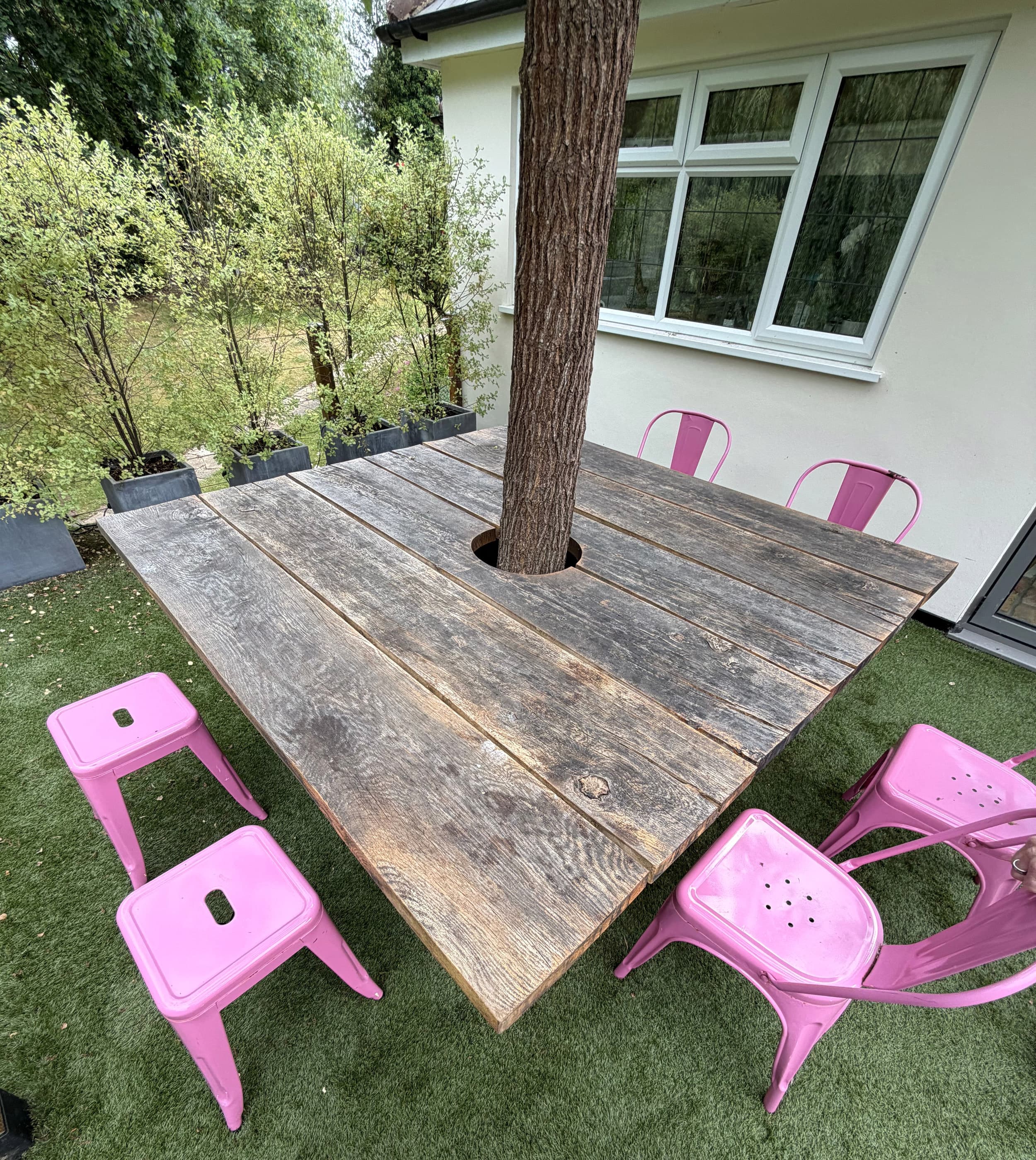
Specification
What it is actually made of.
If you are holding two quotes for work like this, compare them here rather than on the total. The difference between a number and a much lower number is almost always in this list.
- Top
- Solid European oak, wide boards laid in two halves
- Base
- Reclaimed brick plinth, set clear of the root plate
- Aperture
- Shaped and cut oversize to allow for trunk growth
- Finish
- Exterior oil, refreshed annually
- Fixings
- Stainless steel throughout
- Made
- In place, in the garden, to the tree as it stands
Why it lasts
Left alone it will go silver-grey in about two summers, which most people decide they prefer once they have seen it. Oiled, it stays warm. Either way the oak is doing the work and there is no coating to fail.
Roughly what work like this runs to.
Not one of the sixteen Surrey competitors we profiled publishes a price. These are guide ranges for this kind of job, so you can decide whether to call before you call.
- Bespoke side gate, hung and ironmongered
- £600 – £1,500
- Bin store or log store
- £900 – £2,200
- Fencing, per metre installed
- £85 – £180
Indicative 2026 figures for Surrey, including materials and fitting. A guide, not a quote. Your quote is fixed, in writing, and comes after we have measured. All guide prices.
Asked most about garden joinery.
- What timber lasts longest outside?
- Oak and cedar, comfortably — both sit at durability Class 2 under BS EN 350, against Class 5 for untreated softwood sapwood. But tanalised softwood detailed properly and kept off the ground will outlast oak that has been badly detailed. How water gets off end grain matters more than the species.
- Why do gates drop?
- Almost always because the brace is running the wrong way, or the post is undersized. A brace has to run upward from the hinge side so it works in compression. Run the other way it is in tension, and timber joints are weak in tension — so it does nothing at all.
- Do you take the old fence away?
- Yes — old fencing and posts are taken away for correctly licensed disposal rather than left in a pile behind the shed. As the householder you have a legal duty of care over where your waste ends up, so it is always worth asking any trade how waste will be disposed of.
More on how this work is done, and what changes the price, on the garden joinery page.
Keep going
Tell us what you are trying to fit, and where it has to go.
Four quick questions, no essay and no obligation. We will come and measure, and you will have a drawing and a fixed price within a week.
Every enquiry answered within one working day.