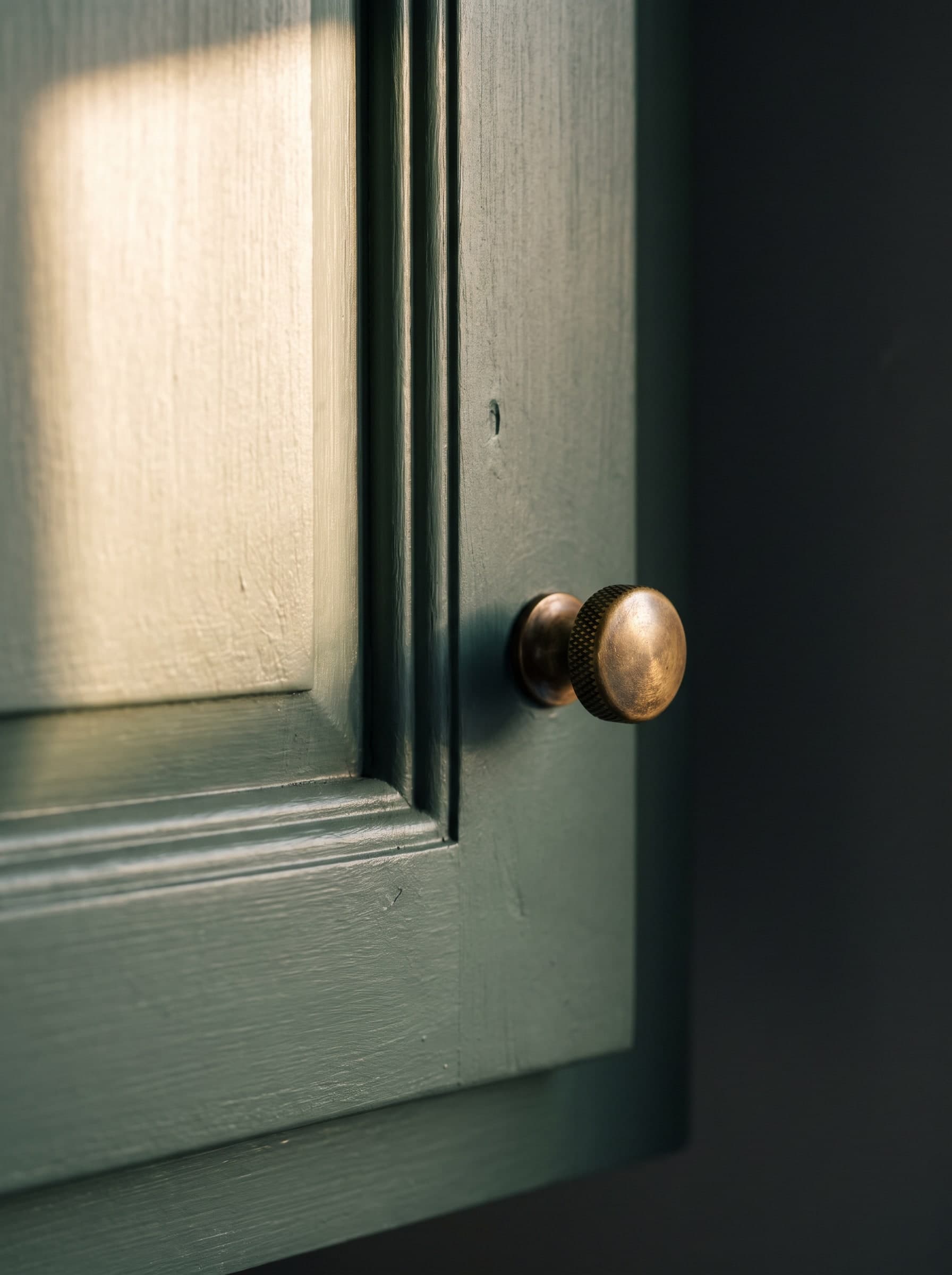
Shaker, tongue-and-groove or fluted
Shaker panelling is a frame of flat rails and stiles fixed over the wall, creating recessed panels. It is the most popular choice for halls, stairs and bedrooms and the least expensive to have fitted.
Tongue-and-groove is boards slotted together edge to edge, usually to dado height. It suits bathrooms, boot rooms and cottages.
Fluted or reeded panelling is the most expensive: the boards themselves cost more, and every joint and edge is on show.
Why the setting out matters more than the timber
Panels that end in a sliver at a corner or a light switch are the giveaway of a job set out from one end and hoped for the best. A good installer sets the panel widths from the centre of the wall, around windows, doors and sockets, so every panel in the room is the same and the edges are balanced.
Sockets and switches usually need moving forward onto the panel face, and skirting often comes off and goes back on top. Both are part of the cost.
Stairs and halls cost more
Panelling up a staircase follows the rake of the stairs, so every rail and panel is cut on an angle and nothing repeats. Expect a staircase wall to cost more per square metre than a flat bedroom wall of the same area.
What moves the price.
- Wall area, and how many obstructions interrupt it
- Panelling style: fluted and full-height cost more than a simple shaker grid
- Whether existing skirting stays or is replaced to suit
- How far out of plumb the wall is — fluted profiles show it, flat panels forgive it
- Number of sockets, switches and radiators to work around
- Painting: included as standard, but colour changes and multiple coats add time
How to keep the cost down.
- Panel to dado or two-thirds height rather than full height.
- Choose shaker over fluted.
- Do the decorating yourself: ask for the panelling filled, caulked and primed.
- Avoid walls crowded with sockets and switches, which all need moving.
More on how we design, make and fit this work: wall panelling in Surrey.